Monday, March 11, 2013

Pontiac G8 Install

Follow Us Online!    Website - Facebook - YouTube - Join Our Email List

Pontiac G8

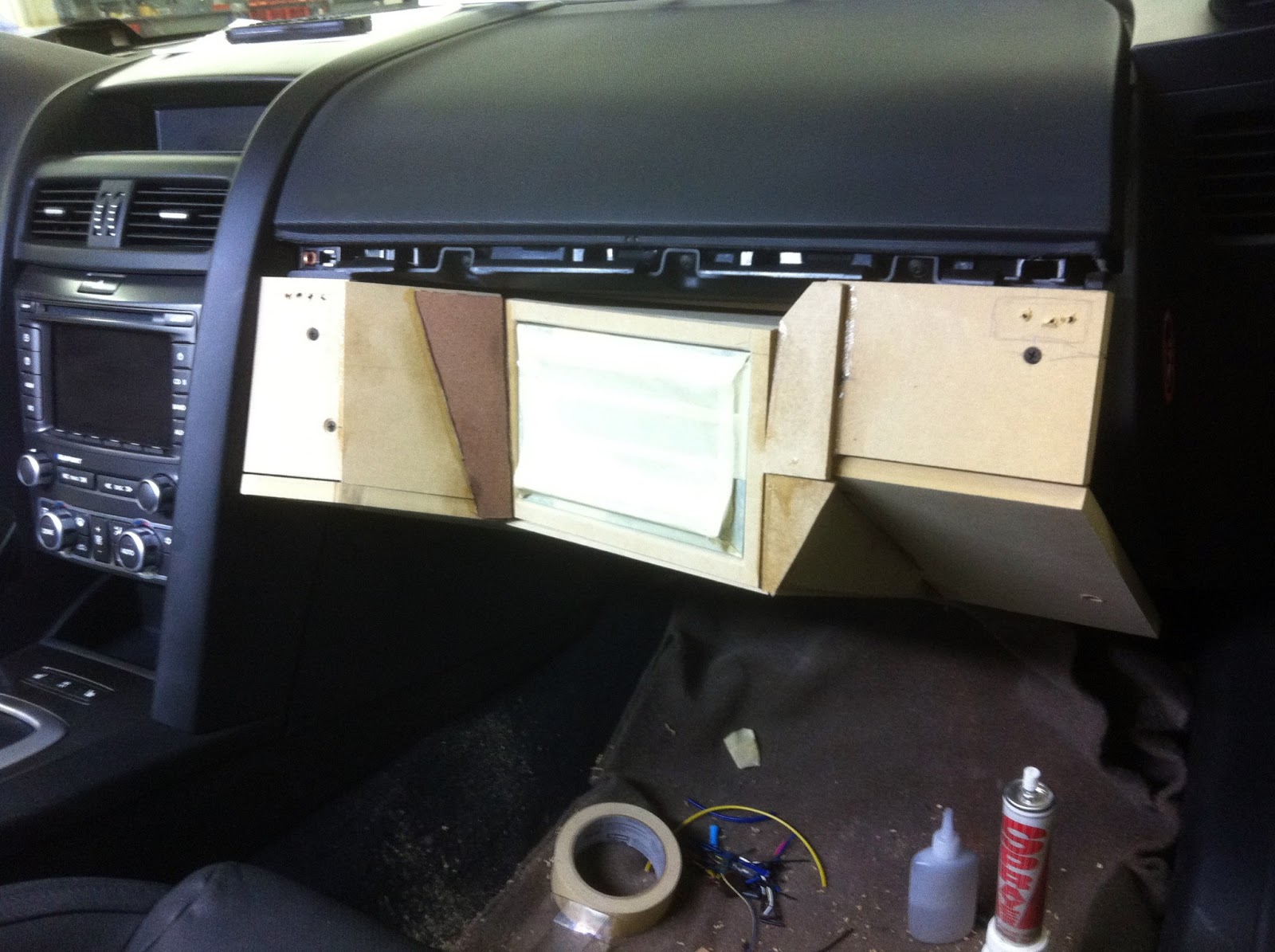
We removed the factory glove box and installed an Alpine navigation.


We had to come up with a creative mount for the 
Alpine radio because the factory radio could not 
be removed because of integration reasons.

We angled the radio towards the driver for easier sight and use.


We also installed Alpine headrest monitors using 
the Alpine navigation as the DVD player.


Monday, February 25, 2013

Do You Need A Subwoofer?

 Follow Us Online!    Website - Facebook - YouTube - Join Our Email List

Before I give you my opinion let me state that I am very conservative in my taste for bass. I am by no means a basshead. I am not a fan of RAP played at such intensity that my kidneys bleed and my heart skips every fourth beat, although I know just how to achieve that effect if desired.  Now, I am a major proponent of a subwoofer…IF it is a realistic sounding one.  I’m not a fan of the subwoofer that just HITS. For me personally, the sub has to do much more than create BOOM, THUMP or relentlessly and monotonously make unmusical and indiscriminant bass. On the other hand, I can’t live without one of those melodic Paul McCartney Hofner guitar runs or the vibrancy and attack in the bass guitar of Yes’ Roundabout or the really deep bass tracks in Genesis’ Selling England By The Pound. I want to hear the exact difference in pitch as the bass guitarist moves up and down the musical ladder. I want to be able to distinguish between a bass guitar being plucked or picked or the difference between an electric bass and a kick drum on the same song. I don’t want to miss out on the fundamental subsonic frequencies that add weight and sole to the original recording.    

So, the first reason for a subwoofer is the realistic reproduction of the music in its entirety. As you go lower into the musical scale you pass a threshold where the sound transitions from more of an audible sensation to more of a tactile sensation. What was strictly audible gives way to what is also feelable. How are you going to reproduce a 32-foot pipe organ without moving some serious air? The pipe organ certainly moved some air and can be felt deeply. And for plausible bass, if you are trying to reproduce a real instrument, then both the subwoofer and sub amplifier have to be working well within their limits. Exposing the limits of either speaker or amplifier quickly ruins the bass quality. You cannot reach these lower registers and get true authoritive bass with coaxial/components.

The second reason and maybe even bigger than the first, is that once you place the coaxial/components in the highpass mode (meaning the very lowest frequencies are filtered out) and relieve them of the longer bass excursions and notes that they can't effectively reproduce anyway; suddenly the fullrange speakers deliver far more clarity, dynamics and a sense of transparency. It also helps to limit the fullrange amplifier’s bandwidth and responsibility. Now there is more power and dynamic space available to reproduce the fullrange. Those long and wasted excursions by the coaxial/component midbass driver smear the midbass and midrange content.

In any playback medium, every higher frequency and upper harmonic is inherently modulated in a lower frequency. When you bi-amp with a separate subwoofer you are simplifying the signal that each amplifier and speaker is asked to reproduce and you are significantly raising the quality level of the fullrange.  

David
Earmark Car Audio

www.earmarkcaraudio.com

Monday, February 11, 2013

Cadillac CTS-V Audio System Rescue


Follow Us Online!    Website -  Facebook - YouTube - Join Our Email List


This 2009 Cadillac CTS-V was brought to Earmark after the customer had a complete audio system and sound dampening installed by another local shop. Earmark technicians inspected the vehicle and we immediately discovered the installation was a mess and would need to be completely redone in order to satisfy the customer.

The customer complained that the audio system would make loud popping noises long after the stereo was turned off, the subwoofer was not centered in the enclosure/port, the "custom" tweeter installation looked terrible and the general cosmetic fit & finish of the installation was not acceptable.

A detailed explanation with photos will show the problems we found and what we did to solve them.

TWEETERS
First, the "custom" tweeter pods. The previous installer built in the tweeters using lots of bondo and left a very rough, uneven surface to the door frames which was simply spray painted black. Bondo is OK as a filler, but it has no structural integrity and will not adhere to molded plastic. 

The result was a rough, unfinished look that did not fit in with the refined interior of this Cadillac and would definitely not last very long before separating and cracking. Also, the driver and passenger side tweeters were not pointed in the same direction due to sloppy construction of the tweeter mounts. 


Earmark rebuilt the tweeter mounts to be correctly aligned and recovered the entire door frames with black suede to match the interior of the vehicle.


DOORS
Next, the door speakers and sound dampening. The sound dampening material had been applied randomly/haphazardly and was covering the power window motors and much of the factory wiring. It was not properly applied and was falling off the doors in many places. 

Look carefully at the door speaker crossover. It appears to be mounted to the door...

...but when the sound dampening material is pulled back we discovered that the door speaker crossovers were not mounted at all!

The previous installer had mounted the crossovers to the sound dampening material ONLY with a piece of metal back brace and clips. This crossover would soon fall into the door cavity, scratching the window and damaging the crossover.

Here's another look at a door with the inner skin sound dampening material removed (it mostly fell off). Note the exposed wire connectors in the top left of the photo, these went to the tweeter. The speaker wiring was draped loosely in the door panel with crimped connectors exposed to the metallic backing of the sound dampening which should easily cause a short in the speaker wire.

Also, the 3-layer wooden speaker baffle that adapted the speaker to the door was barely screwed together, but not glued together, and was only painted on the face. This baffle would not last and would soon be moisture damaged and come apart.

And a look at one of the rear doors, with sound dampening material placed randomly over factory wiring and power window motor.

Here's a shot of a door after Earmark technicians applied Blackhole Tile to the outer door skin and Hushmat to the inner door skin (the Hushmat is black, not silver, so it blends in on the black painted surface of the door). The Blackhole Tile is a coated water-resistant multi-layer high efficiency acoustical absorption pad applied in a "checkerboard" pattern to the outer door skin. The Hushmat, a sound deadening and absorbing material that also insulates against heat, is neatly applied to the inner door skin surfaces. These door speakers will show a noticeable improvement in sound quality with this treatment, and the interior of the vehicle will be noticeably quieter on the road.

Note the wiring - Earmark's speaker wires are soldered and heat shrunk and tied neatly to the factory wiring path. Also, the crossover is securely mounted to the door with a metal bracket that our technicians fabricated.

A closeup of the crossover mounting.

A closeup of the speaker wiring.

Earmark also added a set of speakers to the rear doors. Note that the crossovers are securely mounted directly to the door panel and all wiring is neatly run and connections are soldered and heat shrunk.

All 4 doors received Blackhole Tile to the outer door skin and Hushmat to the inner door skin.


SUBWOOFER ENCLOSURE
The subwoofer enclosure that was installed in the trunk took up a lot of trunk space and did not allow the customer access to the spare tire well which contains the emergency air pump in case of a flat tire. It was not possible to remove the tire well cover panel to access this storage area.

And now I'll let these photos of the subwoofer enclosure tell the story.....


Earmark fabricated a new enclosure of correct internal displacement that was wider and shallow enough to allow access into the spare tire well area.


The finished product is very clean and blends into the Cadillac trunk, giving no indication that there is a high end audio system hidden inside. The facade that covers the front edge of the amp rack has a plexiglass window back-lit by white LED's to allow viewing of the amp rack, and the JL Audio and Cadillac logos were added to the window for an etched glass look when lit.


INTERFACE & AMPLIFIERS
The Cadillac CTS-V has a factory installed audio & navigation system with a motorized LCD monitor in the dash and audio controls integrated into the steering wheel and dash cluster. The customer understandably did not want to replace this system so he needed an interface device. 

The previous shop installed an Audio Control LC6i interface, which Earmark replaced with an Audison BIT TEN D interface after cleaning up the wiring and returning the factory wiring to stock specifications. The previous shop had left factory control modules hanging by their wire harnesses, attached with sound dampening material or just shoved behind a carpeted panel. There were bare exposed wires, wires that had been cut and spliced many times, and just a general mess.

This was the mess we encountered when we removed the trunk panel to access the speaker wiring. The audio interface was hanging by a zip tie and was in close proximity to several factory modules, which could cause interference or noise in the audio system.


Earmark re-wired the audio system and properly mounted the Audison BIT TEN D interface to the amp rack, where it was away from any possible interference from the vehicle's electrical system. Note that all wires are neatly routed and secured with strain relief cable clamps.

The customer also upgraded to the new JL Audio V3 Slash amplifiers.


A factory-neutral or "stealth" installation, at which Earmark excels, typically does not show all of the detailed work that goes into an involved, high quality installation. So what looks good on the surface can be ugly on the inside, and what looks simple on the outside can be very complex on the inside. This is why it's important to take your vehicle to a qualified specialist with a proven reputation for excellence.

And this doesn't even take into account how different an audio system can sound when the installation is done by a qualified expert as opposed to someone who just knows how to hook up the wires. At Earmark the job isn't considered finished when it's playing, we take the time to properly set up the gain structure of the system components, adjust the crossovers to suit the vehicle and equipment, and tune the system with select program material so that the end result is a system that not only looks great but also sounds great. That's why you bought the system in the first place, right?


www.earmarkcaraudio.com

Monday, January 28, 2013

Understanding Speakers- Part 1

Follow Us Online!    Website -  Facebook - YouTube - Join Our Email List

Here is an example of an amplitude/response graph for a speaker with a somewhat irregular frequency response. Let’s call this speaker ‘A’.


The above measurement is taken free air in an anechoic chamber so all the peaks and valleys you see in the response graph are a product of the speaker and not the environment or enclosure. The peaks and valleys represent erratic amplitude at various frequencies.

You might be curious as to the cause of such uneven or erratic speaker behavior. There are a number of contributing factors.

One major cause is the speaker’s natural resonance. Just like a tuning fork, a drum skin or a guitar string, every object has a resonance. So the speaker, made up of the diaphragm, the voice coil, motor strength, spider and outer surround, has a complex but combined resonance that impacts the response.

Another major cause throughout the speaker’s range are the nodal or break-up modes where the speaker does not behave as a uniform diaphragm. At one frequency the speaker’s cone may warp much like a ‘Figure 8’. Looking at the speaker as if it’s a clock, at 9 and 3 the cone may be moving outward in unison but at 12 and 6 the cone may be moving inward or lagging in movement so that it is partially out of phase. This subtle twisting of the cone is referred to as the ‘conical break-up mode’. Another nodal pattern may be when the cone ripples from center to the outer rim similar to how the surface of water ripples away from the center when you throw in a stone. This subtle flexing is referred to as the ‘axial break-up mode’. At other frequencies you may see a combination of both of these described nodal patterns (conical and axial) and in varying multiples (number of twists or ripples).

Ripples can also travel outward from the center of the cone and reflect backwards so that the reflected energy is out of phase with and cancels out some of the direct or intended energy. Like I mentioned, these nodal patterns are complex and change behavior with frequency. And by the way, break-up modes get decidedly uglier as you increase the amplitude of the speaker. Since a speaker that reproduces 4000 Hz has to violently change directions 8000 times a second, there is no way you can see these rapid inconsistencies in the speaker cone behavior. But you can definitely hear them as they manifest in the frequency response and dispersion pattern. Here are eight graphic examples of various nodal patterns that can be part of a single speaker at different frequencies. A visual can be worth a thousand words.


Here is another example of an amplitude/response graph for a speaker with an extremely linear (smooth or equal) response. Let’s call this speaker ‘B’.


So which speaker do you think will sound better? Certainly the speaker with the smoother response, like ‘B’, will sound more musical as it portrays every fundamental, harmonic and nuance in perfect balance and without false emphasis or dips that conceal vital information. Certainly speaker ‘B’ will cause less listening fatigue. Certainly speaker ‘B’ will give you the satisfaction of feeling you are hearing all the background detail at a lower listening level. Certainly speaker ‘B’ will deliver louder listening levels without irritation.   

In the next chapter of this article we’ll explore how some speaker builders achieve better results and why others do not.   

Visit an Earmark and give our excellent speaker selection a listen, and look for continuing articles and blogs on this subject of Understanding Speakers.

David
Earmark Car Audio     


Monday, January 14, 2013

Commercial Van I


 Follow Us Online!    Website - Specials - Facebook - YouTube - Join Our Email List


2011 Ford Transit Connect to be taken to CES 2012 in Vegas.

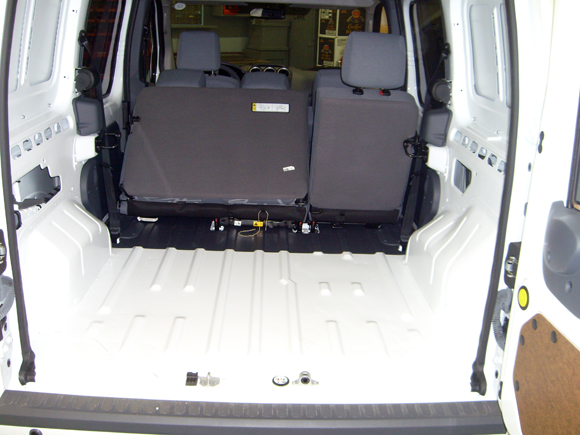
Before we got started.

Down to the bare painted metal before starting the build.

Side walls, shelves, and raised flooring built and test fitted.
Aluminum metal framing made for bracing and structure.

Finished product laminated walls and floor ready
for CES. Mounts for tablets and PC installed.

Alcatel-Lucent logo made and lit up with purple LED's.
An entire network was built and hidden inside the
raised floor including: router, hdmi, 2.0 usb, CAT6e,
and a mobile 4G hotspot.

We custom mounted a camera in the headliner like
you would see in a first responder type vehicle.

We took out the plain cloth seats and had them re-wrapped in a 
two-tone leather. You can also see the inside of the metal framing.

Two wi-fi antenna's installed on the roof for the mobile hot 4G hotspot.

These LED's really glow when the lights are dimmed
and you can really see the van come to life.

 LED's inside the shelves and behind the Alcatel-Lucent Logos.


www.earmarkcaraudio.com